


كيفية بناء نظام فحص أبعاد آلي لخطوط الإنتاج
2026-05-20 23:25اهتزاز
الآلات القريبة، حركة الروبوت، حالة الأرضية
الغبار، رذاذ الزيت، سائل التبريد، الرقائق، جودة الهواء
يحمي أجهزة الاستشعار والمجسات والتجهيزات وقطع العمل.
أمان
منطقة الروبوتات، الحراسة، التوقف الطارئ، التعشيق
يحمي المشغلين والمعدات
صيانة
تنظيف الحساسات، وتآكل التركيبات، ومعايرة المجسات، ونسخ النظام احتياطيًا
يحافظ على استقرار النظام على المدى الطويل للإنتاج
| 7. التحقق من صحة النظام قبل بدء الإنتاج الكامل | قبل استخدام نظام فحص الأبعاد الآلي في الإنتاج الكامل، يجب التحقق من صحته باستخدام قطع حقيقية، وتجهيزات حقيقية، وبرامج حقيقية، وظروف إنتاج حقيقية. يجب أن تتضمن عملية التحقق فحص التكرارية، وزمن الدورة، ودقة القياس، وثبات التحميل، ومخرجات التقارير، واتصال البيانات، ومعالجة النتائج غير الطبيعية. | لا ينبغي للمشترين الاكتفاء باختبار قدرة الجهاز على قياس قطعة واحدة سليمة، بل عليهم اختبار أداء النظام خلال دورات متكررة، ومع مشغلين مختلفين، ودفعات إنتاج مختلفة، وفي ظل أي تباين محتمل في الإنتاج. يساعد هذا في تجنب المشاكل الخفية بعد تركيب النظام على خط الإنتاج. |
|---|---|---|
| قائمة التحقق من صحة النظام | اختبار التكرارية باستخدام دورات قياس متعددة | التحقق من الدقة باستخدام أجزاء مرجعية أو قطع معايرة |
| اختبار زمن الدورة مقارنةً بزمن دورة الإنتاج | فحص استقرار تحميل وتفريغ التجهيزات | التحقق من معايرة المجس أو الكاميرا أو المستشعر |
| اختبار إخراج التقارير وتصدير البيانات | التحقق من قرار النجاح/الفشل باستخدام عينات جيدة وسيئة معروفة | اختبار معالجة غير طبيعي بسبب جزء مفقود أو جزء خاطئ أو فشل في القياس |
| 8. ما المعلومات التي يجب على المشترين إعدادها قبل تقديم عرض الأسعار؟ | تتطلب مشاريع الفحص البُعدي الآلي معلومات أكثر من مجرد عرض سعر لآلة عادية. يحتاج المورّد إلى فهم القطعة، والعملية، وتصميم خط الإنتاج، وسرعة الفحص، وطريقة الأتمتة، ومتطلبات البرمجيات، وأهداف بيانات الجودة قبل التوصية بنظام معين. | قائمة المعلومات الموصى بها |
| رسومات الأجزاء، وملفات التصميم بمساعدة الحاسوب، ومتطلبات التفاوتات | الأبعاد الحرجة، وعناصر التسامح الهندسي، ومعايير الفحص | حجم القطعة، وزنها، مادتها، حالة سطحها، وحجم إنتاجها |
الوقت اللازم للدورة ووقت دورة الإنتاج
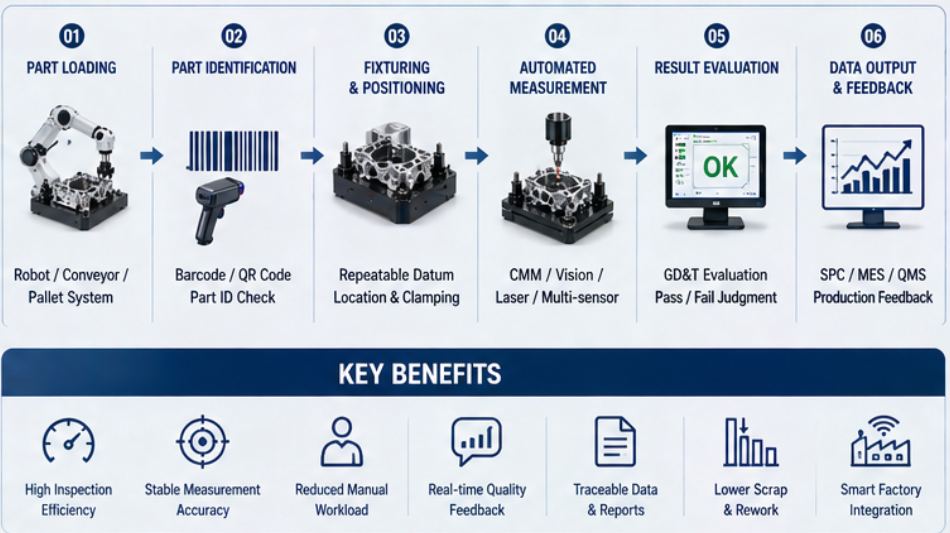
تخطيط الخط الحالي، وطريقة التحميل، ومساحة التركيب المتاحة
تفضيل التحميل اليدوي، أو الروبوتي، أو الناقل، أو المنصات، أو الطاولة الدوارة
تقنية القياس المطلوبة: آلة قياس الإحداثيات ثلاثية الأبعاد، أو الرؤية، أو الليزر، أو المسح الضوئي، أو أجهزة الاستشعار المتعددة
متطلبات إعداد التقارير البرمجية، والتحكم الإحصائي في العمليات، ونظام إدارة عمليات التصنيع، ونظام تخطيط موارد المؤسسات، ونظام إدارة الجودة، أو متطلبات إخراج البيانات
الظروف البيئية مثل درجة الحرارة والاهتزاز والغبار ورذاذ الزيت
توقعات السلامة والصيانة والتدريب ودعم ما بعد البيع
9. أخطاء شائعة يجب تجنبها
البدء بأجهزة التشغيل الآلي قبل تحديد متطلبات الفحص.
اختيار تقنية القياس دون التحقق من خصائص وتفاوتات القطعة الحقيقية.
مع تجاهل قابلية تكرار التثبيت واستقرار موضع القطعة.
تصميم تحميل الروبوت دون مراعاة خلوص المجس أو المستشعر.
إنتاج البيانات بدون عملية واضحة لتلقي ملاحظات الإنتاج.
التقليل من شأن مخاطر درجة الحرارة والاهتزاز والغبار وبيئة أرضية المصنع.
| الفشل في التحقق من إمكانية التكرار ووقت الدورة في ظل ظروف الإنتاج الحقيقية. | الإفراط في أتمتة عملية لا تزال بحاجة إلى معالجة يدوية مرنة. | عدم التخطيط للصيانة والمعايرة وتدريب المشغلين والدعم طويل الأجل. |
|---|---|---|
| إن تجنب هذه الأخطاء يساعد المصنعين على بناء نظام فحص آلي موثوق وعملي ومفيد لمراقبة جودة الإنتاج الحقيقية. | خاتمة | يتطلب بناء نظام فحص أبعاد آلي لخطوط الإنتاج تقييمًا شاملاً لمتطلبات الفحص، وتقنية القياس، والتجهيزات، وطريقة التحميل، وسير عمل البرمجيات، ومخرجات البيانات، والبيئة، والسلامة، وعملية التحقق. يجب ألا يقتصر النظام الناجح على قياس الأجزاء بدقة فحسب، بل يجب أن يوفر أيضًا تغذية راجعة سريعة للإنتاج، ويقلل من تباين أداء المشغلين، ويحسن التحكم في العملية، ويدعم بيانات الجودة القابلة للتتبع. من خلال إعداد الرسومات، ومتطلبات التفاوت، وإيقاع الإنتاج، وتخطيط الخط، واحتياجات تكامل البيانات قبل تقديم عرض الأسعار، يمكن للمشترين بناء حل فحص آلي أكثر عملية وموثوقية. |
| هل تحتاج إلى نظام فحص أبعاد آلي؟ | تواصلوا معنا لمناقشة خط إنتاجكم، ورسومات الأجزاء، ومتطلبات التفاوتات، وزمن الدورة، واحتياجات التجهيزات، وتقنية القياس، وتقارير البرامج، وخطة تكامل البيانات. يمكننا مساعدتكم في تقييم حلول الفحص الآلي المناسبة لضمان مراقبة جودة الإنتاج بشكل مستقر. | اتصل بنا |
| احصل على عرض سعر | Inline inspection and continuous production | Connects measurement directly with production flow |
| Pallet or fixture system | Batch inspection and part family production | Improves repeatable positioning and changeover control |
| Rotary table | Multi-station inspection workflow | Allows loading and measuring in parallel |
5. Build Measurement Software And Data Workflow
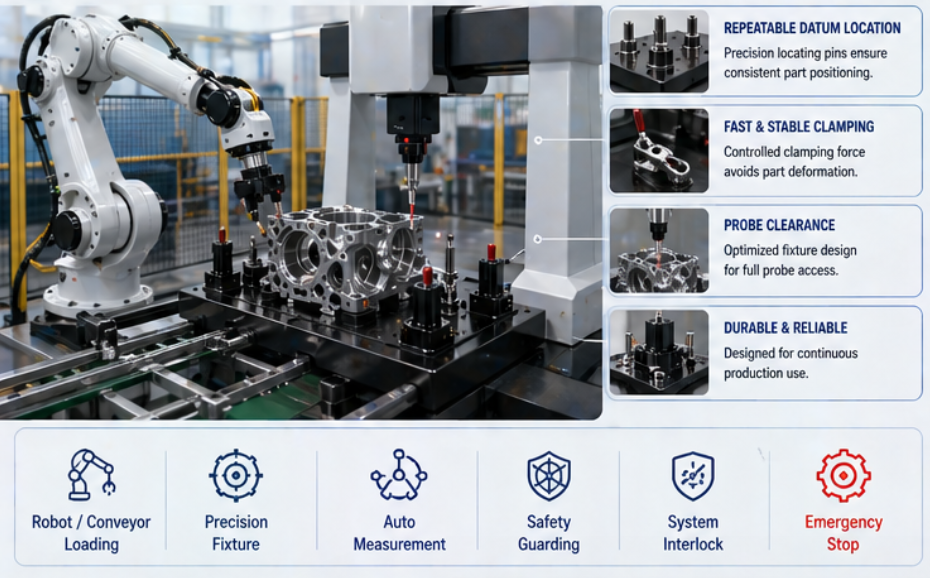
Software is the center of an automated dimensional inspection system. It controls measurement programs, sensor operation, part identification, report generation, data output, and quality decisions. Buyers should check whether the software supports CAD import, GD&T evaluation, automatic program selection, barcode or QR code input, SPC output, pass/fail judgment, and integration with production systems.
For manufacturing lines, inspection data should not stay only inside the measurement machine. It should support production feedback. If a dimension trends toward the tolerance limit, the system should help engineers identify process drift early. This can reduce scrap, rework, and customer quality issues.
Software And Data Checklist
Automatic measurement program execution
Barcode, QR code, or part ID recognition
CAD import and GD&T inspection capability
Automatic report generation and pass/fail judgment
SPC data output and trend analysis
Data export for MES, ERP, QMS, or internal quality systems
Alarm or feedback when dimensions approach control limits
Program version control and traceability records
6. Control Environment, Safety And System Reliability
Automated inspection systems used near manufacturing lines may face temperature fluctuation, vibration, dust, oil mist, operator traffic, robot movement, and changing production conditions. These factors can affect measurement stability and system reliability. Before installation, buyers should evaluate the site environment and decide whether environmental control, vibration isolation, air filtration, enclosure protection, or temperature compensation is needed.
Safety is also important. If the system includes robots, conveyors, automatic doors, moving probes, or loading stations, the layout should include safety barriers, interlocks, emergency stops, collision prevention, and clear operator procedures. Reliability depends not only on machine accuracy but also on safe and stable daily operation.
| System Factor | What To Check | Why It Matters |
|---|---|---|
| Temperature | Part temperature, room fluctuation, heat sources | Reduces measurement drift |
| Vibration | Nearby machines, robot movement, floor condition | Improves repeatability and measurement stability |
| Cleanliness | Dust, oil mist, coolant, chips, air quality | Protects sensors, probes, fixtures, and workpieces |
| Safety | Robot area, guarding, emergency stop, interlock | Protects operators and equipment |
| Maintenance | Sensor cleaning, fixture wear, probe calibration, system backup | Keeps system stable over long-term production |
7. Validate The System Before Full Production
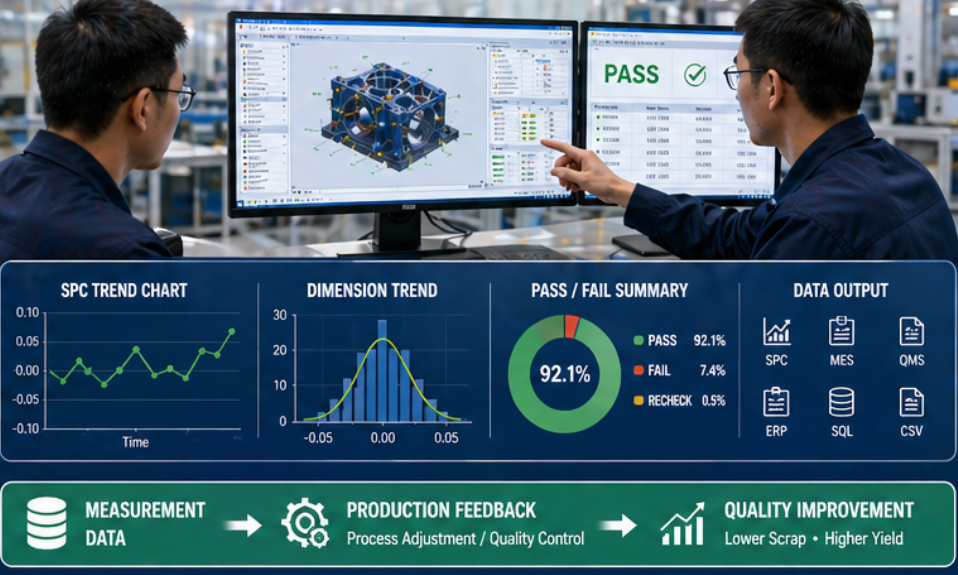
Before an automated dimensional inspection system is used in full production, it should be validated with real parts, real fixtures, real programs, and real production conditions. The validation process should check repeatability, cycle time, measurement accuracy, loading stability, report output, data connection, and abnormal result handling.
Buyers should not only test whether the machine can measure one good part. They should test how the system performs across repeated cycles, different operators, different batches, and possible production variation. This helps prevent hidden problems after the system is installed on the line.
System Validation Checklist
Repeatability test with multiple measurement cycles
Accuracy verification using reference parts or calibrated artifacts
Cycle time test compared with production takt time
Fixture loading and unloading stability check
Probe, camera, or sensor calibration verification
Report output and data export test
Pass/fail decision verification with known good and bad samples
Abnormal handling test for missing part, wrong part, or failed measurement
8. What Information Should Buyers Prepare Before Quotation?
Automated dimensional inspection projects require more information than a standard machine quote. The supplier needs to understand the part, process, line layout, inspection speed, automation method, software requirements, and quality data goals before recommending a system.
Recommended Information Checklist
Part drawings, CAD files, and tolerance requirements
Critical dimensions, GD&T items, and inspection standards
Part size, weight, material, surface condition, and production volume
Required cycle time and production takt time
Current line layout, loading method, and available installation space
Manual, robot, conveyor, pallet, or rotary table loading preference
Required measurement technology: CMM, vision, laser, scanning, or multi-sensor
Software reporting, SPC, MES, ERP, QMS, or data output requirements
Environmental conditions such as temperature, vibration, dust, and oil mist
Safety, maintenance, training, and after-sales support expectations
9. Common Mistakes To Avoid
Starting with automation hardware before defining inspection requirements.
Choosing measurement technology without checking real part features and tolerances.
Ignoring fixture repeatability and part positioning stability.
Designing robot loading without considering probe or sensor clearance.
Building data output without a clear production feedback process.
Underestimating temperature, vibration, dust, and shop-floor environment risks.
Failing to validate repeatability and cycle time under real production conditions.
Over-automating a process that still needs flexible manual handling.
Not planning maintenance, calibration, operator training, and long-term support.
Avoiding these mistakes helps manufacturers build an automated inspection system that is reliable, practical, and useful for real production quality control.
Conclusion
Building an automated dimensional inspection system for manufacturing lines requires a complete evaluation of inspection requirements, measurement technology, fixtures, loading method, software workflow, data output, environment, safety, and validation process. A successful system should not only measure parts accurately, but also provide fast feedback to production, reduce operator variation, improve process control, and support traceable quality data. By preparing drawings, tolerance requirements, production rhythm, line layout, and data integration needs before quotation, buyers can build a more practical and reliable automated inspection solution.
Need An Automated Dimensional Inspection System?
Contact us to discuss your manufacturing line, part drawings, tolerance requirements, cycle time, fixture needs, measurement technology, software reporting, and data integration plan. We can help you evaluate a suitable automated inspection solution for stable production quality control.